Welcome to Our website!

 Esperanto
 Shqiptare
 Euskara
 Zulu
Zulu
 Latinus
 Cymraeg
 தமிழ்
தமிழ்
 Slovak
 Slovak
 Afrikaans
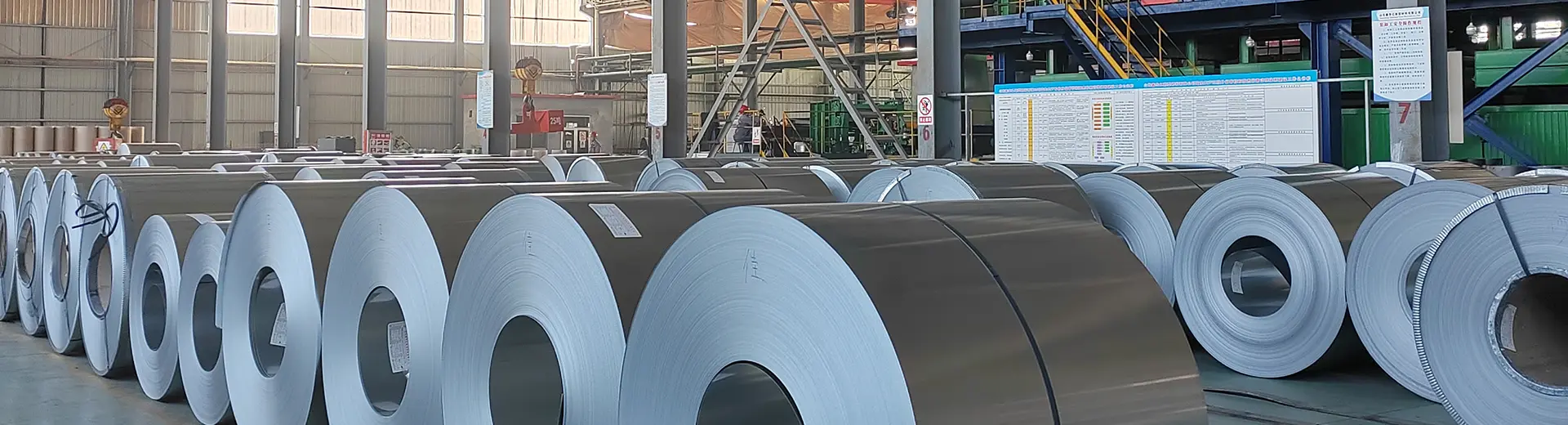
Selection of coating materials for color steel coils
Currently, the types of coatings used for color-coated steel plates include polyester coatings/fluorocarbon coatings/silicon modified coatings/high weather-resistant coatings/acrylic coatings/polyurethane coatings/plastisol coatings, etc.
Currently, the types of coatings used for color-coated steel plates include polyester coatings/fluorocarbon coatings/silicon modified coatings/high weather-resistant coatings/acrylic coatings/polyurethane coatings/plastisol coatings, etc.
1. Polyester coating has good adhesion to materials. Color-coated steel plates are easy to process and shape. They are cheap, have many products, and have a wide range of color choices. Under direct exposure in normal environments, the anti-corrosion life can be as long as 7-8 years. However, in industrial environments or heavily polluted areas, its service life will be relatively shortened. However, the UV resistance and film shatter resistance of polyester coatings are not ideal. Therefore, the use of PE coatings still needs to be restricted. It is usually used in areas with less air pollution or for products that require multiple molding and processing.
2. Because polyester contains reactive groups -OH/-COOH, it easily reacts with other macromolecules and polymers. In order to improve the light resistance and crushability of PE, silicone resin with excellent color retention and heat resistance is used for denaturation reaction, and the denaturation rate with PE can be between 5% and 50%. SMP provides better durability of steel plates, and its anti-corrosion life can reach 10-12 years. Of course, its price is also higher than PE, but due to the unsatisfactory adhesion and processability of silicone resin to materials, SMP color-coated steel plates are not suitable for occasions that require multiple molding processes. They are mostly used in building roofs and exterior walls.
3. High weather resistance polyester coating is better than ordinary silicon modified polyester coating, with outdoor weather resistance of up to 15 years. In the process of synthesizing highly weather-resistant polyester resin, monomers containing cyclohexane structures are used to achieve a balance between resin flexibility, weather resistance and cost. Aromatic polyols and polybasic acids are used to reduce the UV absorption of the resin and achieve high weather resistance of the coating. UV absorbers and sterically blocking amines (HALS) are added to coating formulations to improve the weatherability of the paint film.
4. Plastisol has good water resistance and chemical resistance. It is generally a high solid content coating with a coating thickness of 100-300 μM. It can provide smooth PVC coating or photo-embossing treatment as an embossed coating; since PVC coating is a thermoplastic resin with high film thickness, Therefore, it can provide good protection for the steel plate. However, PVC has poor heat resistance.
5. Due to the strong bond energy between PVDF chemical bonds, the coating has good corrosion resistance and color retention. It is a more advanced product among Baosteel's color steel plate and coil coatings for construction. It has a large molecular weight and direct bonding structure. Therefore, in addition to chemical resistance, its mechanical properties, UV resistance and heat resistance are also outstanding. Under normal circumstances, the anti-corrosion life can be as long as 20-25 years. In recent years, fluororesins copolymerized with chlorotrifluoroethylene and vinyl ester monomers have been widely used in my country and are widely used in building exterior walls and metal panels. Due to the use of easily hydrolyzable vinyl ester monomer, the fluorine content is about 30% lower than that of PVDF, and its weather resistance is somewhat different from that of PVDF.
MORE NEWS
Understanding A214 Carbon Steel Round Bar: Properties and Applications
A214 carbon steel round bars are essential materials in various industrial applications, particularly in the metallurgy and energy sectors. Known for their exceptional strength and durability, these bars are widely used in construction, manufacturing, and other engineering applications. Understanding the properties and benefits of A214 carbon steel round bars can help businesses make informed deci
2026-08-27
Maximizing Strength and Flexibility with ST12 Cold Rolled Steel Sheets: A Comprehensive Guide
Maximizing Strength and Flexibility with ST12 Cold Rolled Steel Sheets Table of Contents Introduction to ST12 Cold Rolled Steel Sheets What is ST12 Cold Rolled Steel? Benefits of Using ST12 Steel Sheets Applications of ST12 Cold Rolled Steel Sheets Mechanical Properties of ST12 Steel Sheets Manufacturing Process of ST12 Cold Rolled Steel Maintenance and Care for ST12 S
2026-08-20
Understanding NM400 Carbon Steel Plate: Characteristics and Applications
NM400 carbon steel plate is increasingly recognized for its exceptional properties, making it an ideal choice for various applications in the construction and decoration materials sector. Known for its high wear resistance and toughness, NM400 is often employed in situations where durability and strength are paramount. The "NM" in NM400 stands for "Normalized Mild Steel," while the "400" indicate
2026-08-13
Hastelloy C-276: Revolutionizing the Energy Sector with Superior Corrosion Resistance
Hastelloy C-276 and Its Impact on the Energy Sector Introduction to Hastelloy C-276 Hastelloy C-276 is a **nickel-based alloy** renowned for its exceptional resistance to **corrosion** and **oxidation**. Originally designed to withstand harsh environments, Hastelloy C-276 has gained immense popularity across various industries, particularly in the energy sector. It is engineered to perform in extr
2026-08-06
Understanding DC01 Carbon Steel Coil: Characteristics and Applications
The DC01 carbon steel coil is a popular choice in the metallurgy sector, specifically due to its excellent formability and weldability. This low-carbon steel is characterized by its good mechanical properties, which make it suitable for a wide range of applications without compromising strength. It is primarily produced through cold rolling processes, resulting in a smooth surface finish that is o
2026-07-30
SPHC Carbon Steel Coil: Cost-Effective Solutions for Construction Projects
SPHC Carbon Steel Coil: Cost-Effective Solutions for Construction Projects Table of Contents Introduction to SPHC Carbon Steel Coils What is SPHC Steel? Advantages of SPHC Carbon Steel Coils Cost-Effectiveness Durability and Strength Versatility in Applications Applications of SPHC Steel Coils in Construction Structural Use
2026-07-23
LEAVE A MESSAGE
If you are interested in our products, please leave a message.
OUR PRODUCTS
Keep up to date with our latest products


Wechat:
+86-18354346222
(Mr.Wang)
Wechat:
+86-18954325992
(Mr.Wang)
Wechat:
+86-13954316858
(Mr.Wang)
SAF Coolest v1.3.1.2 设置面板 REMSX-AONU-XSASE-SVQ
无数据提示
Sorry, the current section is being updated, stay tuned!
You can view other columns or return to the HOME